



Every day, millions of people rest their fingers on a QWERTY keyboard without ever questioning why it looks the way it does. Yet beyond this familiar layout exists a fascinating universe of weird keyboards — devices built to break rules, solve problems, or simply amaze. From ergonomic marvels to typewriter-inspired art pieces, these unusual keyboards tell a story of human creativity colliding with technology. This article explores the origins, evolution, and cultural impact of weird keyboards, showing how oddity often leads to genuine innovation in the world of computing accessories.
What Makes a Keyboard “Weird”?
A keyboard earns the label “weird” when it deviates from the standard rectangular, QWERTY-based design most people recognize. This can mean unusual key shapes, split layouts, non-alphabetical arrangements, or entirely new input methods like chorded typing. Some weird keyboards are built for ergonomics, reducing strain on wrists and fingers. Others exist purely as novelty items or artistic statements. What unites them is a willingness to challenge convention. Understanding this definition helps explain why so many inventors, hobbyists, and companies have spent decades reimagining something as seemingly simple as a typing device — and why the results are often as functional as they are fascinating.
The Origins of Keyboard Design
To appreciate weird keyboards, it helps to understand where keyboards began. The modern layout traces back to Christopher Latham Sholes, who developed the QWERTY layout in 1873 for early typewriters. His design aimed to reduce mechanical jamming rather than optimize typing speed. This historical accident became the global standard, even after typewriters evolved into computer keyboards. Because QWERTY was never designed for efficiency, inventors have spent over a century proposing alternatives. This ongoing tension between “the standard we know” and “the design we could have had” is the very seed from which countless unusual and experimental keyboards eventually grew.
The Dvorak Keyboard: An Early Rebellion
One of the earliest and most famous alternatives is the Dvorak Simplified Keyboard, patented in 1936 by August Dvorak and William Dealey. Unlike QWERTY, Dvorak arranged keys based on letter frequency, placing the most commonly used letters on the home row. Supporters claim it reduces finger travel and increases typing speed. Despite decades of advocacy, Dvorak never replaced QWERTY commercially, largely due to switching costs and habit. However, it remains a built-in option on most modern operating systems. The Dvorak layout is often considered the grandparent of the modern weird keyboard movement, proving that alternative designs could be both logical and controversial.
Chorded Keyboards: Typing With Combinations
Chorded keyboards represent one of the most unusual categories of input devices. Instead of pressing one key per letter, users press combinations of keys simultaneously, similar to playing chords on a piano. The stenotype machine, used by court reporters since the late 1800s, is a classic example, allowing typists to reach speeds exceeding 200 words per minute. Modern chorded devices like the Twiddler bring this concept to portable computing, enabling one-handed typing for wearable tech users. While the learning curve is steep, chorded keyboards demonstrate how radically different an input method can be while still achieving remarkable speed and efficiency.
Split and Ergonomic Keyboards
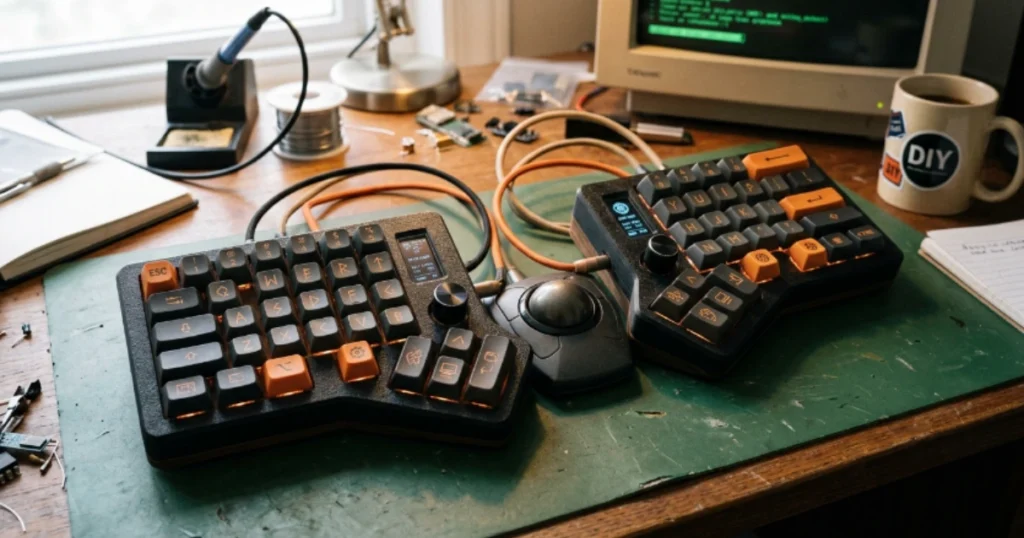
As repetitive strain injuries became a workplace concern in the 1990s, manufacturers began designing keyboards that prioritized comfort over convention. The Kinesis Advantage, released in 1992, split the keys into two curved wells shaped to match natural hand positioning. Similarly, the Maltron keyboard, developed by Lillian Malt in the 1970s, used a concave, sculpted design to minimize wrist strain. These keyboards often look bizarre to first-time users, with keys clustered in unfamiliar patterns. Yet for people suffering from carpal tunnel syndrome or chronic wrist pain, these unusual designs aren’t just novelties — they’re essential tools for pain-free, sustainable typing.
The Optimus Maximus: A Keyboard Made of Screens
Few devices capture the spirit of weird keyboards like the Optimus Maximus, released by Art Lebedev Studio in 2007. Each key featured its own tiny OLED display, allowing the entire layout to change dynamically based on software, language, or application. Priced at over $1,500, it was more art installation than office tool. While impractical for mass adoption, the Optimus Maximus proved that keyboards could be reimagined as fully customizable, visually dynamic interfaces. It inspired later, more affordable variants and demonstrated how far manufacturers were willing to push boundaries purely to showcase technological possibility and design ambition.
Typewriter-Style Mechanical Keyboards
Nostalgia has fueled a growing niche of keyboards designed to resemble vintage typewriters while functioning as modern USB or Bluetooth devices. The Qwerkywriter, launched through crowdfunding in 2015, combined round keycaps, a metal frame, and a satisfying mechanical click reminiscent of classic typewriters. These keyboards appeal to writers, collectors, and aesthetic enthusiasts who want tactile feedback paired with retro visual charm. Though heavier and less compact than standard keyboards, typewriter-style designs prove that “weird” doesn’t always mean futuristic — sometimes it means looking backward, blending functional computing hardware with the romantic aesthetic of a bygone analog era.
One-Handed and Accessibility-Focused Keyboards
Accessibility needs have driven some of the most inventive weird keyboard designs. The FrogPad, introduced in the early 2000s, condensed a full keyboard into a compact one-handed layout, useful for people with limited mobility or specific physical needs. Similarly, Braille keyboards and switch-adaptive input devices allow visually impaired or motor-impaired users to type effectively. These designs often look nothing like traditional keyboards, prioritizing function over familiarity. Far from being mere curiosities, accessibility-focused keyboards highlight how “weirdness” in design frequently emerges from genuine necessity, proving inclusive engineering can produce some of the most innovative input devices ever created.
Gaming and Custom Mechanical Keyboards
The gaming community has embraced weird keyboards as both functional tools and personal expression. Enthusiasts build custom mechanical keyboards with unconventional layouts, artisan keycaps, and unusual switch types offering different sounds and resistance levels. Brands like Das Keyboard even released blank-keycap models, forcing touch-typing mastery. Meanwhile, macro keypads — small clusters of programmable keys — supplement standard boards for specialized gaming or editing tasks. This subculture treats keyboards as customizable hardware platforms rather than fixed office equipment, blending performance engineering with hobbyist creativity. The result is a thriving marketplace where “strange” designs are celebrated rather than dismissed as impractical experiments.
Musical and Alternative Layout Keyboards
Some inventors have questioned whether letters need to be arranged in rows at all. The Colemak and Workman layouts rearrange letters for efficiency while retaining a QWERTY-like shape, appealing to programmers seeking reduced finger movement. More experimentally, some designers have proposed hexagonal keyboards or circular layouts inspired by musical instruments, aiming to reduce repetitive strain through radial finger movement. While these remain niche, they demonstrate ongoing curiosity about whether the traditional grid format is truly optimal. Each alternative layout adds to the broader conversation around ergonomics, efficiency, and creative reinvention within the world of unconventional computer input devices.
The Rise of Giant and Miniature Keyboards
At the extreme ends of the size spectrum, novelty keyboards have carved out their own devoted following. Giant oversized keyboards, sometimes stretching several feet wide, are popular as promotional props, comedic office gadgets, or accessibility aids for users with limited fine motor control. Conversely, ultra-compact 60% and 40% mechanical keyboards strip away function rows and number pads entirely, appealing to minimalists and portability-focused users. Both extremes challenge the assumption that keyboards must conform to a standard size. Whether comically large or impressively tiny, these designs highlight how flexible keyboard engineering has become in meeting diverse practical and entertainment purposes.
Weird Keyboards in Pop Culture
Weird keyboards have also found their way into film, television, and internet culture, often symbolizing eccentricity or futuristic technology. Sci-fi productions frequently feature holographic or glowing keyboards to signal advanced computing. Meanwhile, viral videos showcasing chorded typing, one-handed keyboards, or oversized novelty designs regularly circulate on social media, fascinating audiences unfamiliar with alternative input methods. This cultural visibility has helped normalize the idea that keyboards can be more than utilitarian tools. As public curiosity grows, manufacturers increasingly market unusual designs not just for function, but for their conversation-starting, aesthetically distinctive appeal among tech enthusiasts and casual users alike.
Why People Choose Unconventional Keyboards
Beyond curiosity, practical motivations drive many users toward weird keyboards. Ergonomic designs address physical discomfort, chorded keyboards enable portability, and programmable macro pads boost productivity for specific workflows. Collectors and hobbyists are drawn to craftsmanship, rare materials, and mechanical switch variety. For programmers and writers, alternative layouts like Dvorak or Colemak promise reduced strain during long working hours. Ultimately, the appeal lies in personalization — the idea that a keyboard, something used for hours daily, should match individual needs rather than forcing users to adapt to a one-size-fits-all standard inherited from nineteenth-century typewriter mechanics.
The Future of Keyboard Innovation
Looking ahead, weird keyboards are likely to become even more integrated with emerging technology. Flexible, rollable keyboards already exist for travel convenience, while haptic feedback and AI-assisted typing prediction may further blur the line between physical and digital input. Wearable chorded devices could expand alongside augmented reality interfaces, offering discreet typing methods for smart glasses or mixed-reality headsets. As remote work and digital nomadism grow, demand for compact, ergonomic, and customizable keyboards is expected to rise. Far from fading into obsolescence, unconventional keyboard design appears poised to remain a vibrant, evolving frontier within personal computing hardware.
How to Choose a Weird Keyboard That Works for You
Choosing an unconventional keyboard should start with identifying your specific need. Those with wrist pain should prioritize ergonomic split designs, while portability-focused users may prefer compact or chorded models. Gamers might explore mechanical switch types for speed and durability, while writers could appreciate typewriter-inspired tactile feedback. Budget matters too, since premium designs like OLED-key keyboards can be expensive. Trying a device in person, when possible, helps assess comfort before committing. Ultimately, the “best” weird keyboard isn’t the strangest one available, but the one that genuinely improves your comfort, efficiency, or enjoyment during daily typing tasks.
Conclusion
The story of weird keyboards is really a story about human ingenuity refusing to settle for “good enough.” From the ergonomic breakthroughs of the Kinesis Advantage to the artistic ambition of the Optimus Maximus, and from accessibility-driven inventions to gaming culture’s love of customization, unconventional keyboards prove that even the most familiar tools can be endlessly reimagined. Whether motivated by comfort, efficiency, nostalgia, or pure creative expression, these devices remind us that innovation often begins by questioning the things we take for granted. As technology continues evolving, weird keyboards will likely keep pushing boundaries, blending function and imagination in ways traditional designs never could.
Frequently Asked Questions (FAQs)
1. What is considered a “weird keyboard”? A weird keyboard is any design that significantly deviates from the standard QWERTY layout, including split, chorded, oversized, miniature, or artistic keyboards built for specific ergonomic, accessibility, or aesthetic purposes.
2. Are weird keyboards actually more efficient than standard keyboards? Some, like Dvorak or chorded keyboards, can offer efficiency benefits for specific users, though most people don’t experience dramatic speed improvements without significant retraining and practice.
3. Do ergonomic weird keyboards really help with wrist pain? Yes, ergonomic designs such as split or contoured keyboards can reduce strain for many users, though effectiveness varies by individual and should ideally be paired with proper posture and desk setup.
4. What is the most famous weird keyboard ever made? The Optimus Maximus, with its individual OLED key displays, is widely regarded as one of the most iconic and technologically ambitious unusual keyboards ever produced.
5. Are chorded keyboards hard to learn? Yes, chorded keyboards typically require significant practice since users must memorize key combinations rather than single keys, but they can offer high typing speeds once mastered.
6. Can beginners easily switch to alternative keyboard layouts like Dvorak? Switching requires patience and consistent practice, as muscle memory built on QWERTY can take weeks or months to unlearn before typing speed improves on a new layout.
7. Where can I buy weird or ergonomic keyboards? Specialty ergonomic brands, mechanical keyboard marketplaces, and crowdfunding platforms like Kickstarter are common sources for unusual, custom, or ergonomic keyboard designs.