



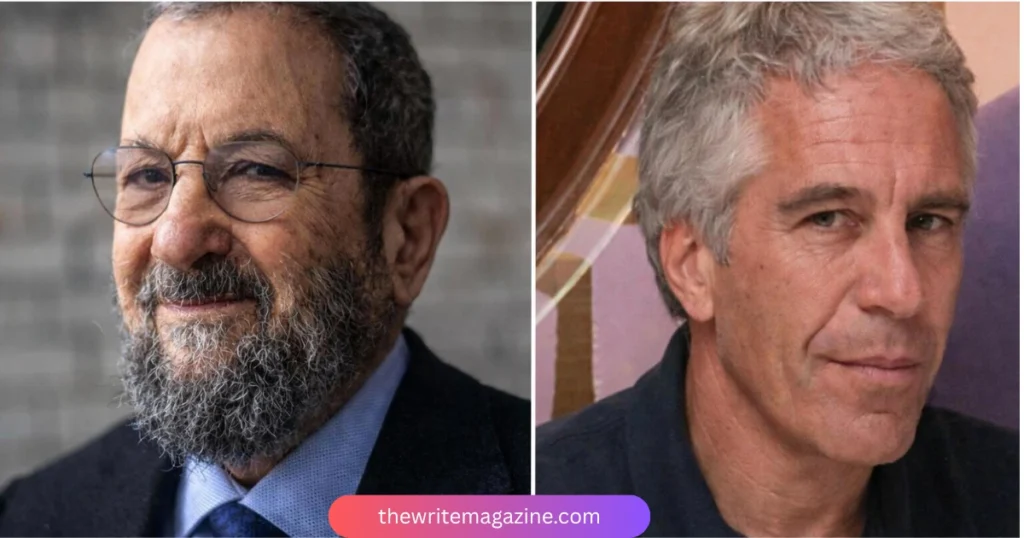
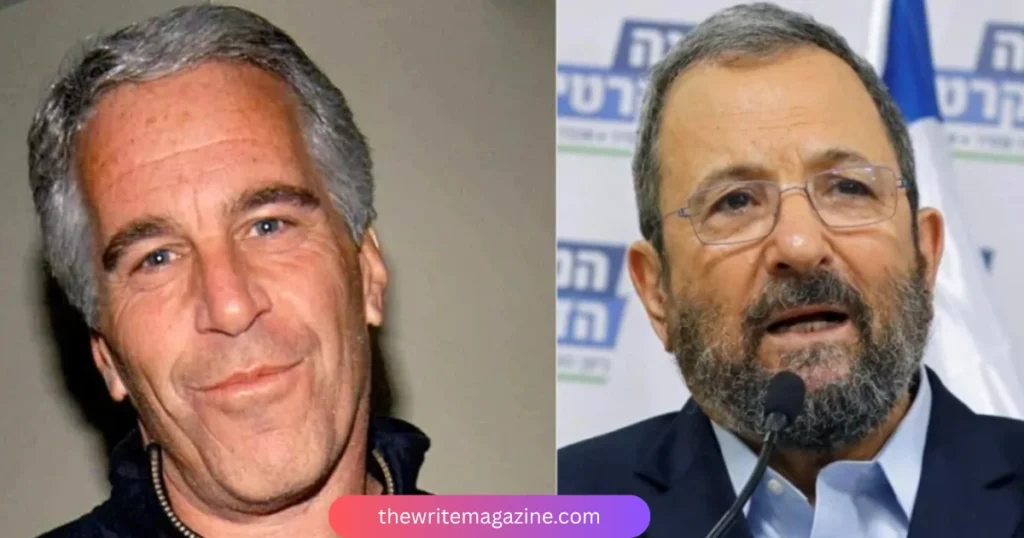
Few relationships in modern political history have drawn as much scrutiny as the Ehud Barak Epstein connection. Ehud Barak, Israel’s former Prime Minister and one of the country’s most decorated military leaders, spent decades building a reputation as a war hero, statesman, and peace negotiator. Yet his name has become inseparable from that of Jeffrey Epstein, the disgraced financier convicted of sex crimes involving minors. This article explores Barak’s full biography — his military rise, political career, and global reputation — alongside a detailed, fact-based look at his long and controversial relationship with Epstein, drawing on emails, court documents, and public statements released in recent years.
Who Is Ehud Barak?
Ehud Barak was born Ehud Brog on February 12, 1942, on Kibbutz Mishmar Hasharon, north of Tel Aviv, to secular socialist parents who had emigrated from Eastern Europe. As a child, he showed an early talent for piano and briefly considered a career as a concert pianist before military life took over. He joined the Israel Defense Forces (IDF) in 1959, beginning a 35-year military career that would make him the most decorated soldier in Israeli history. His path from a kibbutz childhood to national leadership mirrors much of Israel’s own story, and it forms the backdrop against which the later Ehud Barak Epstein controversy would eventually unfold.
Barak’s Rise Through the Israeli Military
Barak’s military record is extraordinary by any standard. He commanded a reconnaissance unit during the Six-Day War (1967) and led a tank battalion during the Yom Kippur War (1973). He became famous for leading elite commando raids, including the 1972 storming of a hijacked airliner at Lod Airport — an operation that included a young Benjamin Netanyahu among its soldiers. Barak also played a key planning role in the legendary Entebbe raid, one of history’s most celebrated hostage-rescue missions. His talent for high-risk operations, combined with sharp strategic thinking, propelled him steadily up the ranks of Israel’s defense establishment.
Chief of the General Staff
In 1991, Barak was appointed Chief of the General Staff, the IDF’s top military position. Before that, he had served as head of Military Intelligence and led Central Command, giving him a rare combination of battlefield and strategic experience. This period cemented his reputation as one of Israel’s sharpest military minds, setting the stage for his transition into national politics under the mentorship of Yitzhak Rabin.
Entry Into Politics and the Path to Prime Minister
After retiring from the military in 1994, Barak entered politics at Rabin’s urging, joining his cabinet as Minister of the Interior. Following Rabin’s assassination in 1995, Shimon Peres named him Foreign Minister. Barak was elected to the Knesset in 1996 and soon became leader of the Labor Party. In 1999, he won a landslide victory to become Israel’s 10th Prime Minister, defeating incumbent Benjamin Netanyahu. His government presided over a period of strong economic growth, near-zero inflation, and record foreign investment.
The Camp David Summit and Middle East Peace
As Prime Minister, Barak pursued an ambitious peace agenda. He ordered Israel’s withdrawal from southern Lebanon in May 2000, ending an 18-year military presence there. Later that year, he took part in the high-stakes Camp David Summit with Yasser Arafat and President Bill Clinton, attempting to reach a final peace agreement with the Palestinians. The talks ultimately collapsed, and the subsequent outbreak of the Second Intifada badly damaged Barak’s political standing. He resigned in December 2000 and was defeated in the following election by Ariel Sharon.
Return as Defense Minister
Barak’s political career did not end there. He returned to government as Minister of Defense under Ehud Olmert from 2007 to 2009, continuing in the role under Benjamin Netanyahu from 2009 to 2013. During this period, he split from the Labor Party in 2011 to form the Independence Party. He retired from politics at the end of 2012, though he later re-emerged as a vocal critic of Netanyahu’s government, positioning himself as a prominent figure in Israel’s pro-democracy protest movement.
How Ehud Barak and Jeffrey Epstein First Connected
The Ehud Barak Epstein relationship reportedly began in the mid-2000s, during a period when Barak was between political offices. According to emails later reviewed by journalists, the two men were introduced through mutual business and philanthropic circles connecting Israel and the United States. Jeffrey Epstein, a wealthy financier with an extensive social network spanning politics, academia, and finance, positioned himself as an adviser and connector for numerous global figures — and Barak became one of his closer contacts. Their communications, spanning 2005 to 2017, reveal a relationship that combined personal warmth with ongoing business collaboration.
The Scope of Their Relationship: Emails, Meetings, and Business Deals
Newly disclosed Department of Justice files and media investigations show that Barak and Epstein met in person dozens of times over the course of roughly a decade. Their correspondence discussed a wide range of subjects, including proposed business ventures involving an Israeli drone company, malaria testing technology, and even a plan to broker the sale of an American billionaire’s oil and gas holdings. Epstein reportedly served as a financial adviser, fixer, and sounding board for Barak, while also facilitating introductions to other prominent figures such as Larry Summers and Alan Dershowitz.
Visits to Epstein’s Properties
Documents confirm that Barak visited Epstein’s Manhattan townhouse on multiple occasions and, along with his wife Nili Priel, traveled to Epstein’s private island in the U.S. Virgin Islands. Barak has stated that he witnessed no inappropriate behavior during these visits. He also reportedly used an apartment arranged by Epstein in New York City while writing his political memoir, further illustrating how deeply the two men’s personal and professional lives intertwined.
Did the Relationship Continue After Epstein’s 2008 Conviction?
One of the most scrutinized aspects of the Ehud Barak Epstein story is the timeline. Epstein pleaded guilty in 2008 to charges of soliciting prostitution from a minor in Florida, serving a limited jail sentence widely criticized as too lenient. According to released correspondence, Barak’s contact with Epstein continued well beyond this conviction, extending into the mid-2010s. Barak has said he was aware of the earlier case but believed Epstein had “paid his debt to society,” a justification he has since acknowledged in hindsight was inadequate given the severity of Epstein’s crimes.
A 2014 Birthday Message
Among the disclosed emails is a January 2014 birthday message in which Barak wrote to Epstein that he was “proud” to call him a friend, describing a gift he and his wife had tried to arrange. Such correspondence has fueled criticism that Barak’s relationship with Epstein was not merely a distant business acquaintance but a genuine personal friendship that persisted for years after Epstein’s crimes were publicly known.
Barak’s Public Apology and Explanation
In February 2026, following a fresh wave of document releases, Barak gave his most extensive public comments to date in an interview with Israel’s Channel 12. He apologized for maintaining the relationship, stating that he “cut off relations” only in 2019, when renewed investigations exposed “the breadth and depth” of Epstein’s crimes. Barak has consistently maintained that he never observed or participated in any wrongdoing and has not been accused of any criminal conduct connected to Epstein’s abuse.
Conspiracy Theories and the Mossad Allegations
The Ehud Barak Epstein relationship has also fueled long-running conspiracy theories suggesting Epstein was a Mossad operative using Barak as a handler. Israeli intelligence officials and political leaders have firmly rejected this claim. Israeli Prime Minister Benjamin Netanyahu publicly stated that Barak’s unusually close relationship with Epstein does not suggest Epstein worked for Israel — if anything, he argued, it suggests the opposite. Analysts examining the newly released files have similarly concluded that Epstein was not an Israeli intelligence asset, but rather someone who cultivated relationships with powerful global figures, including Barak, for his own financial and social benefit.
Financial Requests and Political Funding Discussions
Beyond social visits, correspondence reportedly shows that Barak approached Epstein for funding in 2017, describing the request as necessary for supporting Israeli political causes. This detail has intensified questions about how financial ties between the two men may have intersected with Israeli political life, including initiatives connected to Barak’s later return to public advocacy. Critics argue this blurred the line between personal friendship, business advice, and political fundraising, while Barak’s defenders note that such fundraising relationships were not unusual among global elites at the time.
Why the Story Resurfaced in 2025 and 2026
The Ehud Barak Epstein story returned to headlines after the U.S. Department of Justice released a substantial tranche of Epstein-related files in late 2025 and early 2026. These documents included emails, flight records, and financial communications involving numerous prominent individuals worldwide. Because Barak’s name appeared frequently and in detailed personal exchanges, his case became one of the most closely examined among the many public figures named in the files, reigniting global media coverage and renewed political pressure in Israel.
How This Has Affected Barak’s Public Image
For a man once celebrated as Israel’s most decorated soldier and a leading architect of Middle East peace efforts, the Epstein connection has become a significant blemish on his legacy. Public reaction in Israel has been sharply divided — some view Barak’s ties to Epstein as a serious ethical failure demanding accountability, while others argue that his relationship, while regrettable, does not equate to knowledge of or participation in Epstein’s abuse. Regardless of interpretation, the controversy has undeniably reshaped how Barak is discussed in both Israeli and international media.
Barak’s Legacy Beyond the Controversy
Despite the scrutiny, Ehud Barak’s broader legacy remains historically significant. He is remembered as Israel’s most decorated soldier, a chief architect of its modern military doctrine, and the last left-leaning prime minister to pursue a comprehensive peace agreement with the Palestinians. His withdrawal from southern Lebanon and his Camp David efforts remain reference points in Middle Eastern diplomatic history. At the same time, the Ehud Barak Epstein saga has become an unavoidable chapter in any complete account of his public life, illustrating how personal associations can complicate even the most decorated of careers.
Conclusion
The story of Ehud Barak is one of contrasts: a celebrated military hero and reform-minded prime minister whose legacy is now permanently intertwined with his controversial, decade-long relationship with Jeffrey Epstein. While Barak has not been accused of participating in Epstein’s crimes, the extensive correspondence, repeated visits, and continued contact after Epstein’s 2008 conviction have raised serious questions about judgment and accountability among global elites. As more documents continue to surface, the full picture of the Ehud Barak Epstein relationship — and its implications for Israeli politics — is likely to remain a subject of public interest and debate for years to come.
Frequently Asked Questions (FAQs)
1. What is the connection between Ehud Barak and Jeffrey Epstein? Ehud Barak, Israel’s former prime minister, maintained a personal and business relationship with Jeffrey Epstein spanning roughly a decade, from the mid-2000s until 2019, including visits to Epstein’s properties and joint business discussions.
2. Has Ehud Barak been accused of any crime related to Epstein? No. Barak has not been implicated in Epstein’s sexual abuse of minors and faces no criminal accusations connected to the case. He maintains he never witnessed or participated in any wrongdoing.
3. Did Ehud Barak visit Jeffrey Epstein’s private island? Yes, Barak and his wife visited Epstein’s private island in the U.S. Virgin Islands on at least one occasion, though Barak has said he saw nothing inappropriate during the visit.
4. Why did Ehud Barak apologize regarding Jeffrey Epstein? In 2026, following renewed document releases, Barak publicly apologized for maintaining his friendship with Epstein even after Epstein’s 2008 conviction, acknowledging in hindsight that the relationship should have ended sooner.
5. Is Jeffrey Epstein linked to Mossad through Ehud Barak? No credible evidence supports this claim. Israeli intelligence officials and political leaders, including Prime Minister Netanyahu, have publicly rejected the theory that Epstein worked for Mossad through his relationship with Barak.
6. What was Ehud Barak’s role before becoming prime minister? Before entering politics, Barak served 35 years in the Israeli military, becoming the country’s most decorated soldier and eventually serving as Chief of the General Staff.
7. When did Ehud Barak serve as Israel’s prime minister? Barak served as Israel’s prime minister from 1999 to 2001, during which he withdrew Israeli forces from southern Lebanon and took part in the Camp David peace summit.