



Bashid Mclean, more commonly spelled Bahsid McLean in official court and Bronx District Attorney records, is a New York man who became widely known because of the 2013 murder of his mother, Tanya Byrd. McLean lived in the Bronx, New York, and was 23 years old when Byrd was killed in February 2013. The case attracted major public attention because of the unusually disturbing events that happened after her death and the evidence investigators later discovered. According to the Bronx District Attorney’s Office, McLean was eventually found guilty of second-degree murder and unlawful dissection of a human body.
For people searching “who is Bashid Mclean?”, it is important to separate confirmed information from rumors that have appeared online over the years. Official records identify him as Bahsid McLean, while searches and some online discussions also use the spelling Bashid Mclean. His name became connected with one of the Bronx’s most widely reported murder cases of 2013. The criminal proceedings continued for several years before a jury returned its verdict in November 2016, followed by sentencing in December of that year.
Bashid Mclean Quick Information
| Fact | Information |
|---|---|
| Full name in official records | Bahsid McLean |
| Common search variation | Bashid Mclean |
| Location | Bronx, New York |
| Mother | Tanya Byrd |
| Year of the crime | 2013 |
| Main conviction | Second-degree murder |
| Conviction date | November 4, 2016 |
| Main prison sentence | 25 years to life |
| Sentencing date | December 5, 2016 |
The most important point when reading about the Bashid Mclean case is that it was not simply an internet crime story. It went through a full criminal trial, with prosecutors presenting evidence and McLean’s defense challenging his criminal responsibility. A jury ultimately convicted him after a trial lasting nearly a month, and the court later imposed the maximum sentence for the murder conviction.
What Happened to Tanya Byrd?
The Bashid Mclean case began with the death of his mother, Tanya Byrd, a 45-year-old woman living in the Morrisania area of the Bronx. According to evidence later presented at trial, Byrd was killed in her apartment on February 25, 2013. Prosecutors said McLean stabbed his mother and then dismembered her body. Her remains were placed into bags and luggage and left at different locations around the neighborhood. The disturbing nature of what happened after Byrd’s death was one reason the case quickly attracted attention across New York and later around the world.
The following morning, the investigation began after human remains were discovered among trash in the Bronx. Police eventually connected the remains to Tanya Byrd and focused their investigation on people close to her. One of the most important pieces of evidence was a photograph found during the investigation showing McLean posing with his mother’s severed head. This evidence became widely discussed during news coverage, but the central legal issue remained whether prosecutors could prove that Bahsid McLean killed Tanya Byrd. Years later, a jury concluded that they had.
How Was Bashid Mclean Caught? The Investigation
The investigation into Bashid Mclean and Tanya Byrd developed quickly. Byrd’s remains were discovered on February 26, 2013, after a person walking a dog noticed a suspicious bag near a pile of trash. Police searched the surrounding area and discovered additional bags containing remains. Investigators also searched Byrd’s apartment and gathered physical evidence connected with the case. Early reports said McLean had approached police and reported his mother missing, which brought further attention to him while detectives were trying to understand what had happened.
McLean and an acquaintance, William Harris, were questioned during the investigation. Early reports said the two men blamed each other, making the first stages of the case more complicated. McLean was eventually charged with murder, while Harris faced separate charges connected with the handling of Byrd’s body. Investigators also examined surveillance footage, physical evidence and statements from people connected with the case. The investigation is a useful example of how a major criminal case can be built from several types of evidence rather than from one single discovery.
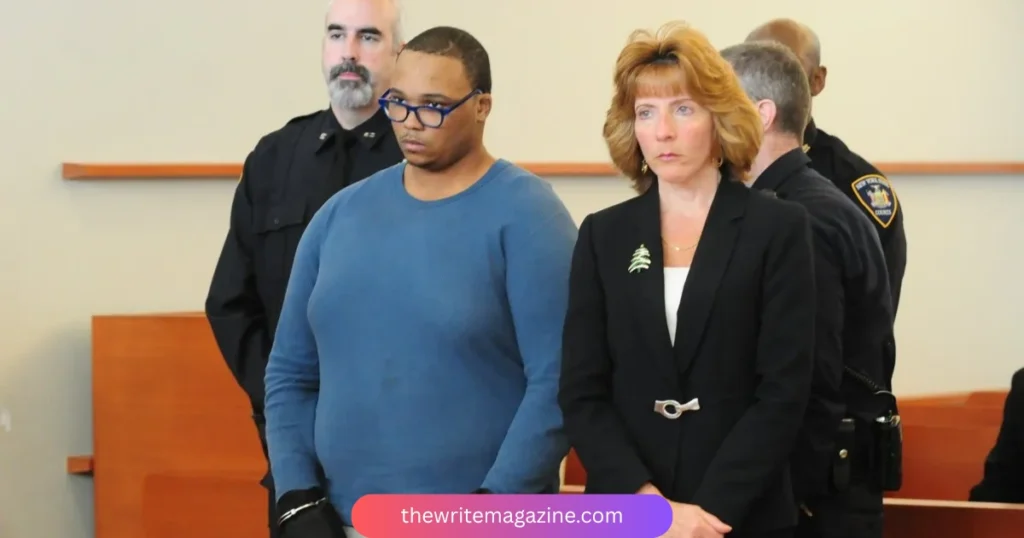
Bashid Mclean Trial and Insanity Defense
The Bashid Mclean trial did not begin until more than three years after Tanya Byrd’s death. One major part of the defense involved McLean’s mental condition. His lawyers pursued an insanity defense, arguing that mental illness affected his ability to understand the nature or wrongfulness of his actions. This is important because an insanity defense does not simply ask whether a defendant has a mental illness. The legal question is much narrower: whether the defendant met the specific legal requirements for being found not criminally responsible when the crime occurred. Reports from the time also noted that McLean underwent psychiatric evaluation after his arrest.
Prosecutors presented a very different picture. They argued that the evidence showed McLean intentionally killed his mother and took deliberate actions afterward. The jury heard testimony and examined the evidence during a trial lasting nearly a month. In the end, jurors rejected the insanity defense and found McLean criminally responsible. On November 4, 2016, he was convicted of second-degree murder and unlawful dissection of a human body. The verdict is an important part of understanding the case because it shows that the jury considered the defense’s mental-health arguments but ultimately found the prosecution had proved its case.
Bashid Mclean Conviction and Prison Sentence
After the guilty verdict, the Bahsid McLean sentencing took place on December 5, 2016. Justice Jeanette Rodriguez-Morick gave McLean 25 years to life in prison for second-degree murder. He also received a consecutive sentence of one and one-third to four years for unlawfully dissecting a human body. A sentence of 25 years to life means that the person must serve a substantial minimum period before becoming eligible to be considered for parole; it does not mean release is automatic after that minimum period.
The sentencing brought the main murder prosecution to an end after more than three years of investigation and court proceedings. Bronx District Attorney Darcel Clark said that the jury had found McLean guilty and that he would “serve the maximum sentence in prison.” The punishment reflected both the murder conviction and the separate offense involving Byrd’s body. McLean later faced an additional indictment relating to an alleged attack on a correction officer at Rikers Island in December 2016, although that separate allegation should not be confused with the convictions and sentence in the Tanya Byrd murder case.
Bashid Mclean Sentence Quick Information
| Case detail | Information |
|---|---|
| Murder conviction | Second-degree murder |
| Verdict date | November 4, 2016 |
| Sentencing date | December 5, 2016 |
| Murder sentence | 25 years to life |
| Additional sentence | 1⅓ to 4 years |
| Additional offense | Unlawful dissection of a human body |
| Judge | Jeanette Rodriguez-Morick |
Where Is Bashid Mclean Now?
People searching “where is Bashid Mclean now?” should be careful with websites that give an exact prison without a recent official record. McLean received a very long New York State prison sentence in 2016. Federal court records from later years confirm that he remained incarcerated in the New York State correctional system. Records from 2021 identified him at Auburn Correctional Facility, while other records show he had previously been housed at facilities including Attica and Mid-State. Prisoners can be transferred between institutions, so an older court document should not be treated as proof of his exact present location.
What can be stated with much more confidence is that the Bashid Mclean prison sentence was 25 years to life plus a consecutive term for the unlawful dissection conviction. Because that sentence began only in the 2010s, the case remains one involving a lengthy period of imprisonment rather than someone who completed a short fixed sentence. Readers may sometimes see social-media posts claiming that McLean has been released, moved to a particular prison or received a different sentence. Such claims should be checked against current correctional or court records before being repeated as fact.

Why Did the Bashid Mclean Case Receive So Much Attention?
The Bashid Mclean case became widely known because several unusual and disturbing elements appeared together. It involved a son convicted of murdering his own mother, the dismemberment of the victim’s body, remains being discovered in different locations and a photograph that became an important part of the public discussion surrounding the case. The crime also raised questions about family relationships, mental health and how the legal system decides whether a person with serious psychological problems can still be held criminally responsible. These subjects made the case more complicated than the shocking headlines alone might suggest.
At the same time, it is important to remember that Tanya Byrd was the victim, not simply a name attached to a famous crime story. Much of the internet discussion focuses on the most graphic details because they attract attention. A more useful way to understand the case is to focus on the confirmed timeline, the investigation, the evidence presented in court and the final verdict. Doing so helps separate documented facts from rumors, exaggerated retellings and unsupported claims that have circulated online since 2013.
Frequently Asked Questions About Bashid Mclean
Who is Bashid Mclean? Bashid, officially recorded as Bahsid McLean, is a Bronx man convicted of murdering his mother, Tanya Byrd, in 2013. Who was Tanya Byrd? She was McLean’s 45-year-old mother and the victim in the case. When was Bashid Mclean convicted? A jury convicted him on November 4, 2016.
What sentence did Bashid Mclean receive? He received 25 years to life for murder, plus a consecutive sentence for unlawful dissection. Where is Bashid Mclean now? Later court records confirm imprisonment in New York State, although his exact current facility may change because prisoners can be transferred.