



Kirk Hammett is one of the most influential guitarists in the history of heavy metal, best known as the lead guitarist of Metallica, one of the best-selling bands of all time. For more than four decades, Kirk Hammett has shaped the sound of modern metal through his fluid solos, iconic riffs, and unmistakable stage presence. From his humble beginnings in the San Francisco Bay Area to becoming a Rock and Roll Hall of Fame inductee, his journey is a story of passion, persistence, and pure musical talent. This article explores the complete biography of Kirk Hammett, covering his early life, career milestones, personal life, and lasting legacy in the music industry.
Who Is Kirk Hammett?
Kirk Lee Hammett is an American musician, songwriter, and guitarist widely recognized for his role in Metallica since 1983. Known for his fast, melodic lead playing and heavy use of the wah-wah pedal, Kirk Hammett has appeared on every Metallica studio album since Kill ‘Em All. Beyond the band, he is celebrated as a solo artist, horror memorabilia collector, and philanthropist. His contributions have earned him a place among Rolling Stone‘s greatest guitarists of all time. Understanding Kirk Hammett’s story means tracing his roots from a modest Bay Area childhood to global rock stardom, a transformation built on discipline, talent, and an enduring love for music.
Kirk Hammett’s Early Life and Family Background
Kirk Hammett was born on November 18, 1962, in San Francisco, California. His mother, Teofila “Chefela” Oyao, was of Filipino descent, while his father, Dennis L. Hammett, was an Irish-American Merchant Marine. This multicultural upbringing shaped his early worldview and creative sensibilities. The family later moved to El Sobrante, California, a small East Bay town where young Hammett spent most of his childhood. Life wasn’t always easy; the household experienced financial strain, and Hammett has spoken openly about a difficult home environment growing up. These early hardships, however, pushed him toward music as an escape and eventually a lifelong calling.
Childhood in El Sobrante, California
Growing up in El Sobrante, Hammett attended De Anza High School, where he famously met Les Claypool, who later formed the band Primus. The two remained close friends for decades. As a teenager, Hammett worked part-time jobs, including a stint at Burger King, to save enough money to buy his first Marshall amplifier. This determination reflected the work ethic that would later define his professional music career. His school years were also marked by a deep fascination with horror films, a passion that would later become one of his most defining personal traits outside of music.
Discovering Music and the Guitar
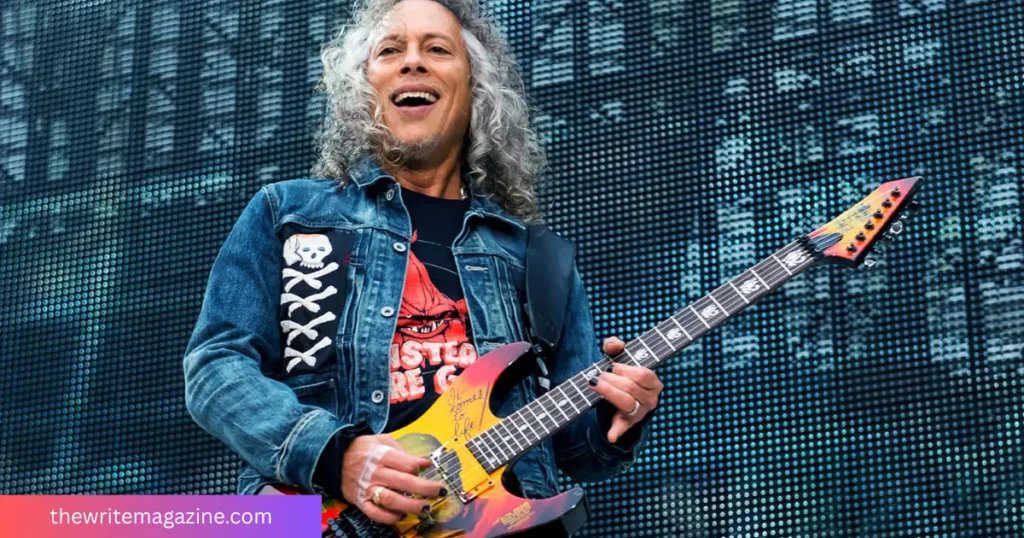
Kirk Hammett picked up his first guitar at age 15, starting with an inexpensive Montgomery Ward catalog model. He was heavily influenced by his older brother Rick’s extensive record collection, featuring bands like Led Zeppelin, Black Sabbath, and UFO. However, it was Jimi Hendrix who left the deepest impression on him, inspiring Hammett’s melodic and expressive playing style. He practiced obsessively, often locking himself away for hours to perfect scales and solos. This early dedication laid the foundation for the technical skill and emotional depth that would later define his guitar work in Metallica.
Kirk Hammett’s Education and Early Musical Influences
While music dominated his teenage years, Kirk Hammett also pursued formal education later in life. After Metallica’s massive success in the early 1990s, he enrolled at City College of San Francisco to study literature and philosophy, showing his intellectual curiosity beyond music. His early influences extended beyond rock, incorporating classical composers and horror film scores, which later shaped his solo work. Guitarists like Michael Schenker and Ritchie Blackmore also played a role in molding his fast, melodic style. This blend of diverse influences—rock, classical, and cinematic—helped Hammett develop a guitar voice that was both technically impressive and emotionally resonant.
The Formation of Exodus
Before joining Metallica, Kirk Hammett co-founded the thrash metal band Exodus in 1979, at just sixteen years old. The band included vocalist Paul Baloff, bassist Geoff Andrews, and drummer Tom Hunting. Hammett named the group after the Leon Uris novel Exodus. The band became a cornerstone of the Bay Area thrash metal movement, sharing stages with future icons of the genre. During this period, Hammett also began taking private guitar lessons from the legendary Joe Satriani, refining his technique significantly. Exodus’s raw energy and Hammett’s rising guitar skills soon caught the attention of a rising band called Metallica.
How Kirk Hammett Joined Metallica
In 1983, Metallica—then composed of James Hetfield, Lars Ulrich, and Cliff Burton—was preparing to record their debut album in New York. Original guitarist Dave Mustaine was dismissed due to behavioral issues, creating an urgent need for a replacement. Having seen Exodus perform live, the band called Hammett and invited him to audition. Despite never having left California before, he flew to New York the same day. His audition, built around the song “Seek & Destroy,” impressed the band immediately, and he was asked to join Metallica on the spot.
Replacing Dave Mustaine
Stepping into Dave Mustaine’s shoes was no small task, given his reputation as a skilled guitarist. However, Kirk Hammett quickly proved he belonged, bringing a smoother, more melodic approach that complemented Hetfield’s aggressive rhythm playing. Bassist Cliff Burton reportedly compared Hammett’s style to European metal legends like Schenker and Blackmore, solidifying his place within the band’s evolving sound. This transition marked the beginning of one of the most successful guitarist tenures in metal history, one that would span over four decades and numerous multi-platinum albums.
Recording Kill ‘Em All
Just weeks after joining, Kirk Hammett entered the studio to record Metallica’s debut album, Kill ‘Em All (1983). Though he didn’t write most of the material, his guitar solos added a distinct flavor that helped define the album’s raw, aggressive tone. The record became a cornerstone of the thrash metal genre and set the stage for Metallica’s rapid rise. Hammett’s contribution to this album marked the true beginning of his lifelong partnership with the band, one built on mutual respect, musical chemistry, and an unrelenting drive to push heavy metal into new creative territory.
Kirk Hammett’s Guitar Style and Signature Sound
Kirk Hammett’s playing style is defined by fluid, melodic solos combined with aggressive rhythm work. His heavy reliance on the wah-wah pedal has become a signature element of his sound, giving his solos an emotional, vocal-like quality. Influenced by Hendrix’s expressive phrasing and Satriani’s technical precision, Hammett blends speed with feeling rather than pure shredding. Over the years, he has also incorporated blues, jazz, and even classical elements into his playing. This versatility has allowed him to remain relevant across decades of changing musical trends, earning him consistent recognition as one of metal’s most distinctive and respected guitarists.
Kirk Hammett’s Contributions to Metallica’s Biggest Albums
Following Kill ‘Em All, Kirk Hammett became increasingly involved in songwriting, contributing riffs and solos to landmark albums including Ride the Lightning (1984), Master of Puppets (1986), and …And Justice for All (1988). These records are widely regarded as some of the greatest thrash metal albums ever made. Hammett’s guitar work added depth and complexity, balancing the band’s aggression with melodic sensibility. His growing creative influence during this era helped cement Metallica’s reputation as pioneers of the genre, setting the stage for their eventual crossover into mainstream success in the following decade.
Master of Puppets and …And Justice for All
The mid-1980s marked a creative peak for Metallica, and Kirk Hammett played a central role in shaping the band’s evolving sound. Master of Puppets is often cited as one of the greatest metal albums ever recorded, featuring intricate arrangements and blistering solos from Hammett. Tragically, this era was also marked by the death of bassist Cliff Burton in a 1986 tour bus accident in Sweden. Despite this devastating loss, the band pushed forward, and Hammett’s guitar work remained a driving force behind Metallica’s continued critical and commercial success throughout the late 1980s.
Writing “Enter Sandman”
Perhaps Kirk Hammett’s most famous contribution came in 1991 with the riff for “Enter Sandman,” reportedly written in a hotel room at three in the morning. The song became one of Metallica’s biggest hits, propelling the band’s self-titled Black Album to massive global success. This track remains a staple of rock radio and live performances decades later. Hammett’s ability to craft simple yet unforgettable riffs demonstrated his songwriting instincts extended far beyond technical solos, proving instrumental in Metallica’s transition from underground thrash pioneers to mainstream rock superstars.
Kirk Hammett’s Guitar Lessons with Joe Satriani
Long before fame, Kirk Hammett studied privately under guitar virtuoso Joe Satriani while still a member of Exodus. These lessons significantly refined his technical ability, scales knowledge, and improvisational skills. Satriani’s mentorship is often credited with helping Hammett develop the melodic fluidity that distinguishes his solos. The relationship between student and teacher remained respectful and influential throughout Hammett’s career, with Satriani later gaining fame as a solo artist himself. This foundational training played a crucial role in shaping the guitarist who would go on to record some of metal’s most iconic solos with Metallica.
Kirk Hammett’s Solo Career: The Portals EP
In April 2022, Kirk Hammett released his debut solo project, Portals, an instrumental EP featuring four cinematic tracks recorded between 2017 and 2020 across locations including Los Angeles, Paris, and Oahu. Released through Blackened Recordings, the EP showcased an “audio-cinematic” approach, blending orchestral textures with Hammett’s guitar work. Unlike his output with Metallica, Portals leaned heavily into atmospheric and horror-inspired soundscapes. This project allowed Kirk Hammett to explore creative territory outside the band’s heavier sound, reflecting his lifelong fascination with horror films and cinematic storytelling through music.
Kirk Hammett’s Love for Horror Memorabilia
Beyond music, Kirk Hammett is widely known as an avid collector of horror movie memorabilia, amassing one of the largest private collections in the world. His collection includes classic film posters, props, and artwork spanning decades of horror cinema history. This passion stems from childhood, when horror films provided an escape and source of inspiration. Hammett has often described his love for horror as parallel to his passion for heavy metal, both genres exploring darker, more intense emotional territory. This hobby has become such a significant part of his identity that it now extends into publishing and public exhibitions.
Too Much Horror Business and Fear FestEvil
In 2012, Kirk Hammett published Too Much Horror Business, a photo book showcasing highlights from his extensive horror memorabilia collection. Two years later, in 2014, he launched Kirk Von Hammett’s Fear FestEvil, an annual horror convention celebrating classic and modern horror culture. These ventures allowed Hammett to share his passion with fans while cementing his reputation as more than just a rock musician. His dedication to horror memorabilia demonstrates a rare blend of artistic interests, combining his metal career with a genuine appreciation for cinematic history and collectible pop culture artifacts.
Kirk Hammett’s Personal Life: Marriage and Family
Kirk Hammett has been married to his wife, Lani Hammett, since 1998. The couple has two sons together, Angel Ray Keala Hammett and Vincenzo Kainalu Hammett. Unlike her husband’s public rock star persona, Lani has largely stayed out of the spotlight, occasionally appearing alongside Hammett at major events like the Rock and Roll Hall of Fame induction ceremony in 2009 and various Grammy Awards. The couple’s relationship has remained stable throughout Hammett’s demanding touring schedule. In recent years, Hammett has also spoken about embracing Buddhism, finding personal peace and mindfulness through meditation amid the pressures of rock stardom.
Kirk Hammett’s Net Worth and Assets
As of recent estimates, Kirk Hammett’s net worth is reported to be around $200 million, largely accumulated through decades of touring, album sales, merchandise, and his stake in Metallica’s record label, Blackened Recordings. His assets reportedly include multiple properties in the San Francisco Bay Area, an extensive guitar collection featuring custom ESP signature models like the KH-2 and KH-3, and his valuable horror memorabilia collection. Metallica’s continued touring success, with reported annual earnings around $20 million from live shows alone, has significantly contributed to Hammett’s substantial personal wealth over his long and successful career.
Awards and Recognition
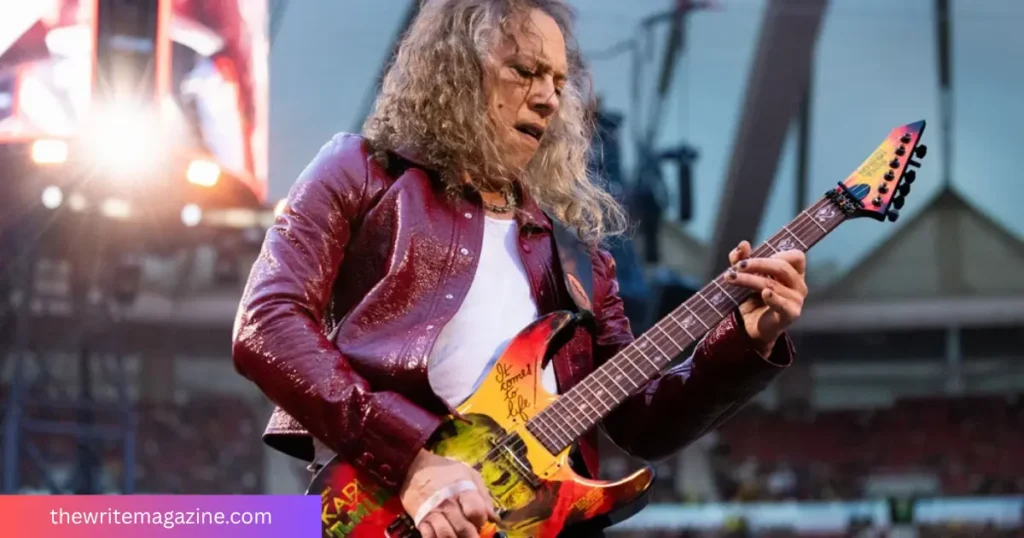
Kirk Hammett’s contributions to music have earned him numerous accolades over the decades. He was inducted into the Rock and Roll Hall of Fame alongside Metallica in 2009 and has won multiple Grammy Awards for Best Metal Performance and Best Metal Album. Rolling Stone ranked him among its list of the 100 Greatest Guitarists of All Time, while in 2023, he and bandmate James Hetfield were jointly ranked 23rd on an updated version of the same list. In 2002, he also became the first inductee into Guitar World magazine’s Hall of Fame, cementing his lasting influence.
Kirk Hammett’s Legacy in Rock and Metal Music
More than four decades into his career, Kirk Hammett remains a defining figure in heavy metal guitar playing. His melodic solos, distinctive tone, and songwriting contributions have influenced countless guitarists across genres. Beyond Metallica, his solo work, horror memorabilia ventures, and philanthropic efforts showcase a multifaceted artist whose impact extends well beyond the stage. As Metallica continues touring globally, Hammett’s role as both a musician and cultural figure ensures his legacy will endure for generations of rock and metal fans, students of guitar, and admirers of horror-inspired creative expression alike.
Conclusion
From a challenging childhood in El Sobrante to becoming one of the most celebrated guitarists in rock history, Kirk Hammett’s journey is a testament to talent, resilience, and passion. His work with Metallica helped define an entire genre, while his solo projects and horror memorabilia collection reveal a creative spirit that extends far beyond the stage. Whether remembered for the unforgettable riff of “Enter Sandman” or his fluid, emotive solos, Kirk Hammett continues to inspire musicians and fans worldwide. His story remains a powerful example of turning personal passion into a lasting, influential career in music.
FAQs About Kirk Hammett
1. When was Kirk Hammett born? Kirk Hammett was born on November 18, 1962, in San Francisco, California.
2. How did Kirk Hammett join Metallica? He joined in 1983 after auditioning to replace outgoing guitarist Dave Mustaine, impressing the band with his performance of “Seek & Destroy.”
3. What band was Kirk Hammett in before Metallica? He co-founded the thrash metal band Exodus in 1979, before leaving to join Metallica.
4. Did Kirk Hammett release a solo album? Yes, he released his debut solo EP, Portals, in April 2022 through Blackened Recordings.
5. Who is Kirk Hammett’s wife? He has been married to Lani Hammett since 1998, and the couple has two sons together.
6. What is Kirk Hammett’s net worth? His net worth is estimated at approximately $200 million, largely from his career with Metallica.
7. Why is Kirk Hammett known for horror memorabilia? He is an avid collector of horror movie posters and props, publishing a book titled Too Much Horror Business in 2012 and launching an annual horror convention in 2014.