



Delonte West is one of the most talked-about names in modern NBA history, not only for his talent on the court but also for his very public battle with mental illness, addiction, and homelessness. Once a rising star for the Boston Celtics and Cleveland Cavaliers, West’s life took a dramatic turn after his professional career ended. Alongside his basketball story is the quieter story of his wife, Caressa Suzzette Madden, who has stood beside him through some of his hardest years. This article explores Delonte West’s full journey — from his childhood in Washington, D.C., to his NBA highs, his personal struggles, and his life today.
Who Is Delonte West?
Delonte Maurice West is an American former professional basketball player best known for his eight-season NBA career with the Boston Celtics, Seattle SuperSonics, Cleveland Cavaliers, and Dallas Mavericks. Born on July 26, 1983, in Washington, D.C., West built a reputation as a gritty, versatile guard who could defend players much taller than himself. Beyond his statistics, West became a widely recognized figure because of his openness about bipolar disorder, a diagnosis that shaped much of his life after basketball. Today, he is remembered both as a talented athlete and as a symbol of how mental health struggles can affect even the most successful professionals.
Early Life and Childhood in Washington, D.C.
Delonte West grew up in Prince George’s County, Maryland, after being born in Washington, D.C. His childhood was marked by financial hardship, and he later described his upbringing as “happy-poor,” moving frequently between relatives’ homes. West is of mixed African American, Native American (Piscataway), and white heritage, and his lighter skin tone and reddish hair reportedly made him a target for bullying during his early school years. Despite these challenges, basketball became his outlet and his path forward. This difficult start is often cited as an important piece of context for understanding both his resilience and the emotional struggles he would face later in life.
High School Basketball Stardom
West attended Eleanor Roosevelt High School in Greenbelt, Maryland, where he quickly became one of the area’s most exciting players. Teaming up with future NBA player Eddie Basden, he led the Roosevelt Raiders to their first-ever state tournament appearance, reaching the Maryland 4A championship game. During his senior season, West averaged an impressive 20.2 points, 6.5 rebounds, 3.9 assists, and 3.1 steals per game, earning him the prestigious Washington Post All-Met Basketball Player of the Year award. This standout high school career set the stage for his recruitment to play college basketball, where his reputation would only continue to grow among top programs.
College Career at Saint Joseph’s University
At Saint Joseph’s University, Delonte West formed one of the most celebrated backcourts in college basketball history alongside Jameer Nelson, who later won the Wooden and Naismith Awards. As a junior, West averaged 18.9 points and 6.7 assists per game, shooting an efficient 41% from three-point range. His contributions helped the 2003–04 Saint Joseph’s Hawks finish a perfect 27-0 in the regular season and advance to the Elite Eight of the NCAA Tournament. This remarkable season elevated West’s national profile and convinced him to forgo his senior year, declaring for the NBA Draft after proving he could compete at the highest levels of college basketball.
The 2004 NBA Draft and Boston Celtics Years
West was selected 24th overall by the Boston Celtics in the 2004 NBA Draft. His rookie season was hampered by injuries, limiting him to 39 games and modest averages. However, he developed quickly, and by the 2005–06 season, head coach Doc Rivers named him the starting point guard. That year, West averaged 11.8 points, 4.1 rebounds, and 4.6 assists per game, earning a spot in the NBA All-Star Weekend’s Rookie Challenge. Over three seasons in Boston, West built a reputation for clutch performances, including a game-winning buzzer-beater and a dramatic game-tying three-pointer, both of which showcased his composure under pressure.
Trade to the Seattle SuperSonics
In June 2007, during the NBA Draft, Boston traded Delonte West, along with Wally Szczerbiak and the fifth overall pick (which became Jeff Green), to the Seattle SuperSonics in exchange for Ray Allen and Glen Davis. This trade marked a turning point in the Celtics’ rebuild toward their eventual 2008 championship roster, but it also sent West into a new chapter of his career. His time in Seattle was relatively brief, as roster changes and team performance issues led to further movement. Just months later, another trade would place him in a much more prominent role, this time with a franchise built around one of the league’s biggest superstars.
Cleveland Cavaliers Era and Playoff Heroics
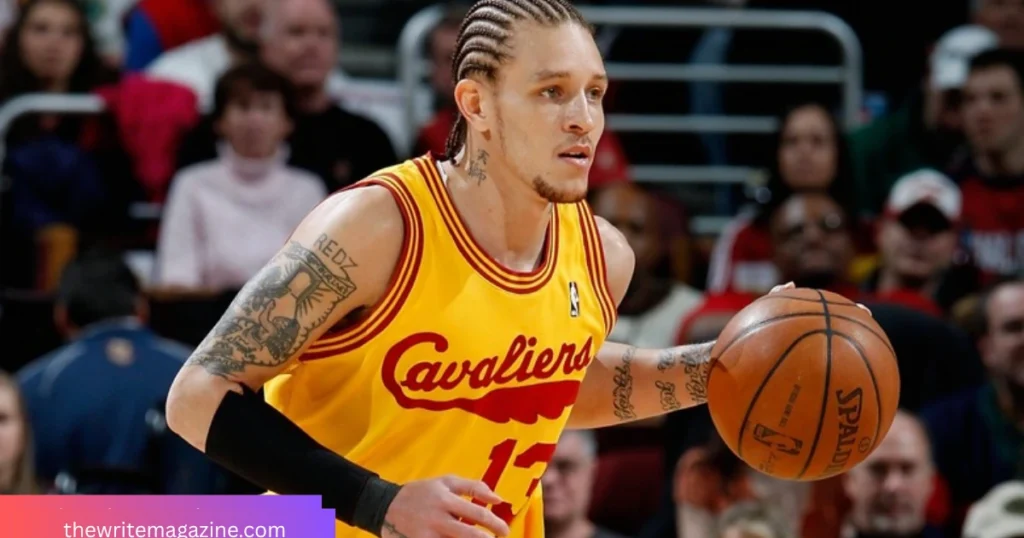
In February 2008, West was part of a three-team trade that sent him to the Cleveland Cavaliers, reuniting him with former college teammate Dwayne Jones. It was in Cleveland that West delivered the most memorable moment of his career: on April 27, 2008, he hit a tie-breaking three-pointer with just 5.4 seconds remaining against the Washington Wizards, pushing the Cavaliers to a 3-1 series lead. That September, he signed a three-year, $12.7 million contract with Cleveland and became the starting shooting guard alongside LeBron James, helping the Cavaliers post a league-best 66-win season in 2008–09.
Personal Struggles Begin to Surface
While West’s on-court performance in Cleveland was strong, cracks were beginning to show off the court. In October 2008, he abruptly left the Cavaliers’ training camp during a mental health crisis, which led to his diagnosis with bipolar disorder. This diagnosis would go on to define much of the public narrative around West for the rest of his life. Just a year later, in September 2009, he was arrested after a traffic stop revealed he was carrying three unlicensed firearms. He pleaded guilty and received two years of unsupervised probation along with community service, an early sign of the turbulence that would follow him throughout his post-basketball life.
Time with the Dallas Mavericks and Career Decline
After his stint with Cleveland ended, West signed with the Dallas Mavericks, where his NBA career would ultimately conclude. During the 2011 NBA lockout, financial pressures mounted, and West reportedly applied for a job at Home Depot before working at a furniture store, since his probation prevented him from playing overseas. His final NBA moment came in October 2012, when the Mavericks suspended him indefinitely following reported disputes with teammates after preseason losses. Across his eight NBA seasons, West averaged 9.7 points, 3.6 assists, and 2.9 rebounds per game, numbers that reflected a solid, if turbulent, professional career.
International and G League Career
Following his NBA suspension, Delonte West continued playing basketball professionally overseas and in developmental leagues. He suited up for the Fujian Xunxing and Shanghai Sharks in the Chinese Basketball Association, seeking to extend his playing career outside the NBA spotlight. He also played for the Texas Legends, Dallas’s NBA Development League affiliate, based in Frisco, Texas — a period that notably overlapped with his growing relationship with Caressa Suzzette Madden. These years represented West’s attempt to stay connected to professional basketball even as his personal life grew increasingly complicated by his ongoing mental health and financial challenges.
Personal Life: Meeting Caressa Suzzette Madden
Delonte West’s personal life became closely tied to Caressa Suzzette Madden, who he reportedly met at a mutual friend’s house during a casual gathering. At the time, West had already stepped away from the NBA and was facing significant financial difficulty. According to multiple entertainment outlets, the couple moved in together at West’s home in Fort Washington, Maryland, before later relocating to a larger property in Potomac. Their relationship developed during one of the most difficult periods of West’s life, with Madden reportedly providing emotional support and stability as he worked through the early stages of his post-NBA transition and mental health challenges.
Marriage, Children, and Family Life
Delonte West and Caressa Suzzette Madden married in 2013, a milestone that coincided with the birth of their first son, Cash West. The couple welcomed a second son the following year, in 2014. Their proposal story has circulated widely online: unable to afford a ring, West reportedly used a piece of jump rope from his garage, telling Madden he was “broke” but still deeply in love with her. Reports also describe financial hardship during this period, including relying on space heaters and boiling water on the stove for baths. Madden has largely stayed out of the public eye, focusing on raising their two sons.
Bipolar Disorder and Its Long-Term Impact
Delonte West’s bipolar disorder diagnosis in 2008 became one of the defining aspects of his adult life. He has spoken publicly about the condition “haunting” him for years and contributing to self-destructive behavior. Bipolar disorder is a mental health condition marked by extreme shifts in mood, energy, and behavior, and without consistent treatment, it can significantly disrupt daily functioning. West’s case drew national attention to how professional athletes cope — or fail to cope — with mental illness while under intense public scrutiny. Former teammates and mental health advocates have repeatedly pointed to his story as evidence that more structured, long-term support systems are needed for athletes after their playing careers end.
Addiction, Homelessness, and Viral Public Moments
In the years following his NBA career, Delonte West experienced repeated cycles of addiction, homelessness, and public crisis. Videos of him panhandling first went viral in 2016, and further disturbing footage emerged in 2020, including one video showing him being physically assaulted on the street. These moments sparked national conversations about the NBA’s responsibility toward former players’ mental health. West has cycled through periods of stability and relapse multiple times, with additional arrests reported in subsequent years, including incidents in 2022 and 2024. Each public episode reignited concern from fans, former teammates, and mental health professionals about the gaps in long-term support for retired athletes.
Mark Cuban’s Intervention and Path to Recovery
One of the most widely reported turning points came in 2020, when Dallas Mavericks owner Mark Cuban personally picked West up from a Texas gas station and paid for his treatment at a rehabilitation facility in Florida. Cuban later shared updates on West’s progress, noting he had “a long, long, long way to go” but had “taken the first steps.” By 2021, reports indicated West was working at the very facility where he had been treated and was making visible progress, including home repairs and stability. This intervention became a symbol of hope, even as West’s journey continued to include additional setbacks in the years that followed.
Recent Updates and Sobriety Milestones
As of early 2026, Delonte West has continued to share updates about his recovery journey. In November 2025, he was reportedly found unconscious in Fairfax County, Virginia, prompting renewed concern from fans and family. However, in March 2026, West announced he had reached 100 days of sobriety, sharing the milestone in a video filmed in Florida alongside a supporter. He described working with a wellness and fitness program as part of his ongoing treatment. His representative expressed pride in his progress, noting that West had voluntarily sought treatment and was appreciative of the continued support from fans throughout his recovery process.
Public Perception and NBA Community Support
Throughout his struggles, several members of the NBA community have publicly voiced support for Delonte West. Former teammate Damien Wilkins, now with the NBA Players Association, has spoken about wanting to connect West with mental health resources through the league’s support systems. Coaches like Doc Rivers and college teammate Jameer Nelson have also reportedly reached out over the years. West’s story has become a frequently cited example in discussions about athlete mental health, prompting broader conversations about what happens to professional athletes once the structure, income, and identity tied to their sport disappear, often leaving them vulnerable during life’s most difficult transitions.
Legacy and Broader Impact on Sports Mental Health Awareness
Beyond his statistics and highlight-reel moments, Delonte West’s story has left a lasting impact on how the sports world discusses mental illness. His openness about bipolar disorder, despite the personal cost, has been credited with helping normalize conversations that were once considered taboo in professional sports. Analysts and former players alike have referenced his journey when calling for stronger post-career support systems within the NBA. While his path has been marked by visible pain, it has also contributed meaningfully to a cultural shift where athletes are increasingly encouraged to seek help rather than hide their struggles, a shift that may benefit future generations of players.
Conclusion
Delonte West’s life tells a story far bigger than basketball. From his standout years at Saint Joseph’s University and his memorable moments with the Boston Celtics and Cleveland Cavaliers, to his public battles with bipolar disorder, addiction, and homelessness, West’s journey reflects both the pressures faced by professional athletes and the fragility of mental health when left unsupported. Through it all, his wife, Caressa Suzzette Madden, and their two sons remain a quiet but constant part of his story. As of 2026, with renewed sobriety milestones, there remains hope that Delonte West’s next chapter will be defined by stability, healing, and continued progress.
Frequently Asked Questions (FAQs)
1. Who is Delonte West? Delonte West is an American former NBA guard who played for the Boston Celtics, Seattle SuperSonics, Cleveland Cavaliers, and Dallas Mavericks between 2004 and 2012.
2. What mental health condition does Delonte West have? West was diagnosed with bipolar disorder in 2008, a condition he has spoken about publicly throughout his life after basketball.
3. Who is Delonte West’s wife? His wife is Caressa Suzzette Madden, whom he married in 2013. The couple has two sons together, including their first son, Cash West.
4. Why did Delonte West’s NBA career end? His career ended in October 2012 when the Dallas Mavericks suspended him indefinitely following reported conflicts with teammates, compounded by ongoing personal struggles.
5. Is Delonte West still struggling with addiction? West has experienced repeated cycles of recovery and relapse. As of March 2026, he announced he had reached 100 days of sobriety.
6. Did Mark Cuban help Delonte West? Yes, in 2020, Mavericks owner Mark Cuban personally intervened, paying for West’s rehabilitation treatment in Florida.
7. What was Delonte West’s best NBA moment? His most iconic moment came on April 27, 2008, when he hit a game-winning three-pointer against the Washington Wizards in the NBA playoffs.