



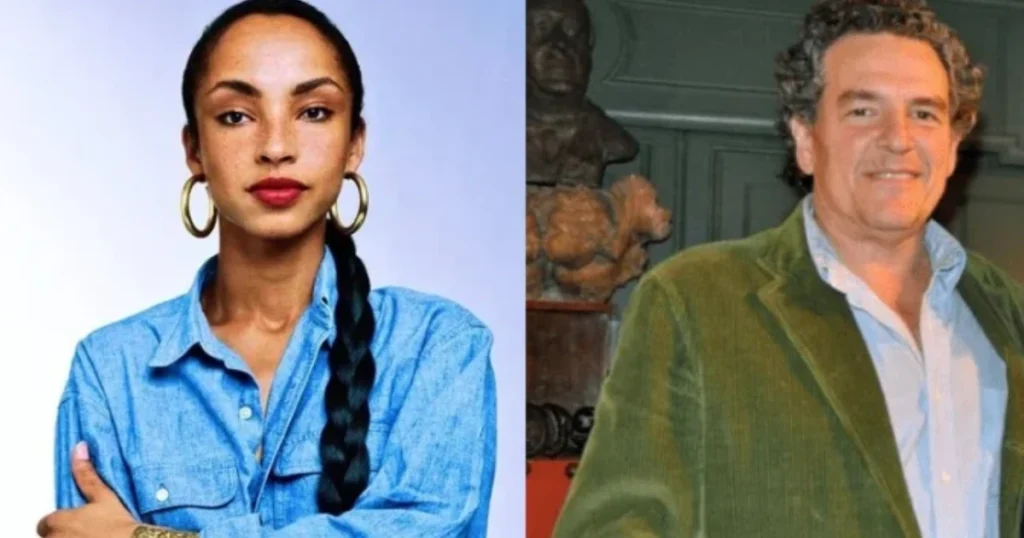
Carlos Scola Pliego is a name that quietly resurfaces whenever fans of the legendary singer Sade Adu dig into her personal history. He is not a household name, and he never sought celebrity status, spending decades avoiding public attention instead. Yet he holds a permanent place in music and film history as the Spanish filmmaker who became Sade Adu’s husband during the height of her global fame. This article explores his early life, his career in European cinema, his romance and marriage to Sade Adu, and the reasons his story continues to attract curious readers today. By the end, you will have a clear, accurate picture of who this private filmmaker really is.
Who Is Carlos Scola Pliego?
He is best described as a behind-the-camera film professional from Spain who worked as a script supervisor, assistant director, and documentary filmmaker from the late 1970s through the 2000s. He never appeared on screen and never courted media coverage, unusual for someone connected to a global music icon. Most recognize the name only because he was Sade Adu’s first and, to date, only husband. Reducing Carlos Scola Pliego to a footnote in her biography overlooks a genuine career in Spanish and international film. Understanding him requires separating verified professional facts from speculation that often surrounds private individuals linked to famous partners.
Early Life and Background
Reliable, publicly verified details about his childhood are extremely limited, and this is a recurring theme throughout the story. Various sources have offered conflicting claims about his exact birthplace, but none of these claims carry strong verification. What is consistently reported is that he has Spanish heritage and developed an early interest in visual storytelling and cinema. Unlike many public figures, he never gave interviews discussing his upbringing, education, or family background. This deliberate privacy has persisted throughout his life, making the early years one of the least documented aspects of an otherwise traceable film career. Even his exact age today is not reliably confirmed in public records.
Entry Into the Spanish Film Industry
His professional journey began in the late 1970s, a period when Spanish cinema was expanding rapidly following the end of the Franco era. He entered the industry not as a director chasing recognition, but as a script supervisor, a technical role responsible for maintaining continuity across scenes. This position requires meticulous attention to detail, patience, and a strong understanding of narrative structure. His early involvement in Spanish productions gave him practical, hands-on experience that would later support his transition into assistant directing. This foundation in the technical side of filmmaking shaped his reputation as a dependable, detail-oriented professional within European cinema circles.
Career Beginnings: Script Supervisor Work
According to industry records, Carlos Scola Pliego worked as a script supervisor on the 1979 Spanish film “La boda del señor cura” and the 1980 production “Opera Prima.” These early credits mark the official start of his documented filmography. Script supervision may not carry the glamour of directing, but it is considered essential to any production, since continuity errors can undermine an entire film. His steady presence in these roles throughout the late 1970s demonstrates that genuine industry experience was being built long before his personal life attracted attention. This period established him as a serious, working professional within the Spanish film community.
Rising to Assistant Director
Between 1981 and 1985, he advanced from script supervision to serving as assistant director on approximately nine film and television projects. This progression reflects growing trust from directors and producers, since assistant directors manage scheduling, coordinate cast and crew, and keep a production on track. It was during this period that his career intersected with internationally recognized productions, expanding his professional network well beyond Spain. This five-year stretch represents the most professionally active phase of his documented career, placing him within larger, higher-budget international film sets rather than purely domestic Spanish productions.
Working on International Productions
One notable chapter of his filmography involves work as assistant director on “Eleni,” an early film featuring John Malkovich, and the acclaimed 1985 miniseries “Christopher Columbus,” starring Gabriel Byrne and Virna Lisi. These productions placed him alongside recognized international talent and gave him exposure to large-scale filmmaking beyond Spanish borders. Working on internationally co-produced projects required coordination across different film industries, languages, and production standards. This experience further cemented his standing as a capable assistant director with a broadening professional resume during the mid-1980s, a formative period just before his life changed through his relationship with Sade Adu.
Documentary Filmmaking Chapter
By the late 1980s, his focus shifted from assistant directing toward creating original documentary work, marking a more independent and creative phase of his career. In 1988, he wrote, directed, and produced “Ngira: Gorilas en la montaña,” a documentary short filmed in the Democratic Republic of Congo, focused on mountain gorillas and African wildlife. He followed this with “Donde termina el corazón,” a full-length documentary exploring broader themes across the African continent. These projects reveal a filmmaker with genuine artistic ambition, moving beyond technical support roles into original storytelling. This period represents his most personally creative professional achievement, distinct from earlier work supporting other directors’ visions.
How Carlos Scola Pliego Met Sade Adu
His story cannot be told without addressing the connection to Sade Adu, the celebrated British-Nigerian singer known worldwide for hits like “Smooth Operator.” The two reportedly met while Sade was filming music videos in Spain with director Brian Ward, promoting her 1985 album “Promise.” Their paths crossing during a professional shoot eventually blossomed into a personal relationship. By 1987, while recording material in France, Sade had already begun introducing him as her husband, even though the official marriage had not yet taken place. This overlap between professional filmmaking circles and the global music industry created an unlikely but genuine romantic connection.
The Relationship With Sade Adu
The relationship between the two developed during a period when Sade was becoming one of the most recognized voices in music. Despite her rising global fame, both individuals maintained a notably private approach to their romance, avoiding the tabloid-style exposure common among celebrity couples. Some music historians and fans have suggested that the emotional undertones present in Sade’s early 1990s recordings may have been shaped, in part, by this relationship and its eventual difficulties. While such connections remain speculative rather than officially confirmed, they illustrate how his presence in Sade’s life extended beyond a simple personal footnote into a period that potentially influenced her artistic output.
Marriage to Sade Adu in 1989
Carlos Scola Pliego and Sade Adu officially married on February 11, 1989, formalizing a relationship that had already been building for several years. The wedding marked a significant turning point, as Sade relocated from London to Madrid, Spain, to be closer to her new husband and his professional base. This move demonstrated the seriousness of their commitment, given that Sade was actively managing an international music career at the time. Their marriage remains one of the most talked-about aspects of Sade’s personal history, largely because she has never remarried since their divorce. This makes him the only man Sade Adu has ever officially wed.
Life in Madrid: The Married Years
During their marriage, the couple reportedly split time between Spain and other locations connected to Sade’s touring and recording obligations. Balancing a globally demanding music career with a relationship rooted in Spain’s film industry presented ongoing challenges. Details about their day-to-day married life remain scarce, since both individuals avoided media interviews about their relationship. What is clear is that this period, spanning 1989 to the early 1990s, coincided with some of Sade’s most emotionally resonant songwriting. Whether or not he directly inspired specific songs remains unconfirmed, but the timing has fueled ongoing fan speculation for decades.
Divorce from Sade Adu
After roughly six years of marriage, the couple divorced in 1995. Neither party has publicly disclosed the specific reasons behind the separation, staying consistent with their shared preference for privacy throughout the relationship. The divorce closed a significant chapter in both of their lives, with Sade eventually returning to London and continuing her music career, while her former husband largely retreated from public visibility. Despite the marriage ending, Sade has spoken warmly about aspects of her past relationships in select interviews without singling out specific details. The divorce remains one of the few firmly documented facts in an otherwise private biography.
Did the Couple Have Children?
A common point of confusion involves whether Carlos Scola Pliego and Sade Adu had children together. Based on consistent reporting, the couple did not have any children during their marriage. Sade’s only child, Izaak Theo Adu, was born in 1996, after her divorce, from a subsequent relationship with Jamaican music producer Bob Morgan. Izaak later became known publicly for coming out as transgender in 2016. Because timelines are often blurred in celebrity biography content online, it is important to clarify that the Spanish filmmaker discussed here is not Izaak’s father, even though some inaccurate sources have suggested otherwise over the years.
Life After the Divorce
Following the 1995 divorce, Carlos Scola Pliego continued working within the film industry, though his public profile diminished considerably. He is credited as additional crew on the 2007 sports drama “Goal II: Living the Dream,” which appears to be his most recent widely recognized film credit. Since then, there have been no confirmed interviews, public appearances, or verified social media presence linked to his name. This extended absence from public life aligns with a pattern established throughout his career: consistent professional involvement in film, paired with a firm avoidance of personal publicity. He appears to have deliberately chosen a quiet, low-profile existence following his marriage to one of music’s most celebrated vocalists.
A Career Spanning Three Decades
Looking at the complete arc of his filmography, the career spans roughly three decades, from a 1979 debut as a script supervisor to a final documented credit in 2007. His body of work includes technical roles on Spanish productions, assistant directing on internationally recognized films, and independent documentary projects filmed in Africa. While he never achieved the recognition of a leading Hollywood or Spanish director, his consistent presence across multiple productions reflects a legitimate, sustained career in cinema. This professional longevity is often overshadowed by the connection to Sade Adu, but it remains an important part of understanding him as more than simply a celebrity spouse.
Why He Remains a Private Figure
One defining characteristic of Carlos Scola Pliego is a sustained commitment to privacy, even decades after his marriage to a global superstar ended. Unlike many individuals connected to famous partners who eventually capitalize on that fame through interviews, books, or social media, he has done none of these things. This has created an information vacuum that numerous online biography sites have attempted to fill, sometimes with unverified or speculative claims. His silence has, paradoxically, kept public curiosity alive rather than diminishing it. For readers researching this filmmaker, the consistent privacy should be understood as a deliberate lifestyle choice rather than a mystery to be solved through speculation.
Net Worth and Lifestyle
Because Carlos Scola Pliego has never given financial interviews or public statements, there is no verified, reliable figure representing his net worth. Various entertainment websites have published estimated figures, but these numbers should be treated as unconfirmed speculation rather than fact. What can be reasonably assumed is that his income was primarily derived from decades of film industry work, including script supervision, assistant directing, and independent documentary production. Unlike Sade Adu, whose music career generated substantial, well-documented wealth, his financial situation has never been part of the public record. This is consistent with his overall approach to privacy throughout adult life.
Public Interest Today
Even decades after the divorce from Sade Adu, Carlos Scola Pliego continues to generate search interest among music fans, film enthusiasts, and casual readers exploring celebrity history. This ongoing curiosity stems largely from Sade’s enduring global popularity and the fact that she has never remarried since their split. Whenever Sade releases new music or gives a rare interview, questions about her personal history, including this marriage, tend to resurface online. This pattern demonstrates how connections to major public figures can create lasting biographical interest, even for individuals who actively avoid the spotlight. His story remains a small but persistent thread within broader Sade Adu fan research.
Lessons From His Story
His story offers an interesting contrast to typical celebrity culture, where visibility and self-promotion are often treated as essential to relevance. Instead, he built a genuine, multi-decade film career while deliberately avoiding fame tied to his marriage. His example shows that meaningful professional work does not require public validation or media attention to hold value. For readers interested in film history, the documentary work in Africa stands as a legitimate creative contribution. For those primarily curious about Sade Adu’s personal history, this story serves as a respectful reminder that not every detail of a celebrity’s past needs to be publicly dissected or sensationalized.
Conclusion
Carlos Scola Pliego remains best known to the wider public as Sade Adu’s only husband, but his life extends well beyond that single connection. As a Spanish filmmaker, he built a genuine, decades-long career spanning script supervision, assistant directing on internationally recognized productions, and independent documentary filmmaking in Africa. His marriage to Sade Adu, lasting from 1989 to 1995, remains one of the most discussed chapters of her personal history, partly because she has never remarried since. Yet his enduring privacy, maintained for decades after the divorce, reflects a deliberate and consistent life choice rather than an unsolved mystery. Understanding the full story means appreciating both his film career and his right to a private life.
Frequently Asked Questions
1. Who is Carlos Scola Pliego? He is a Spanish filmmaker known for his work as a script supervisor, assistant director, and documentary filmmaker, as well as for being the only husband Sade Adu has ever had.
2. When did he marry Sade Adu? They married on February 11, 1989, and remained married until their divorce in 1995.
3. Did the couple have children together? No. Reliable reports confirm they did not have children. Sade’s son, Izaak Theo Adu, was born in 1996 from a later relationship with Bob Morgan.
4. What films did he work on? He worked on productions including “Eleni,” the miniseries “Christopher Columbus,” and directed documentaries such as “Ngira: Gorilas en la montaña” and “Donde termina el corazón.”
5. Is he still active in filmmaking? His last publicly known credit was on “Goal II: Living the Dream” in 2007. There is no confirmed recent professional activity since then.
6. Why is there so little information about him? He has consistently avoided media interviews and public appearances throughout his life, choosing to keep both his career and personal life largely private.
7. What is his net worth? There is no verified, credible net worth figure, as he has never publicly discussed his finances.